COAG AQUA SERIES
Polyaluminium Chloride (PAC) — Coag Aqua series
A pre-hydrolysed coagulant in powder or liquid form, used to clarify surface water and industrial effluent. Supplied direct from our plant in Zhengzhou, with a certificate of analysis for each batch.
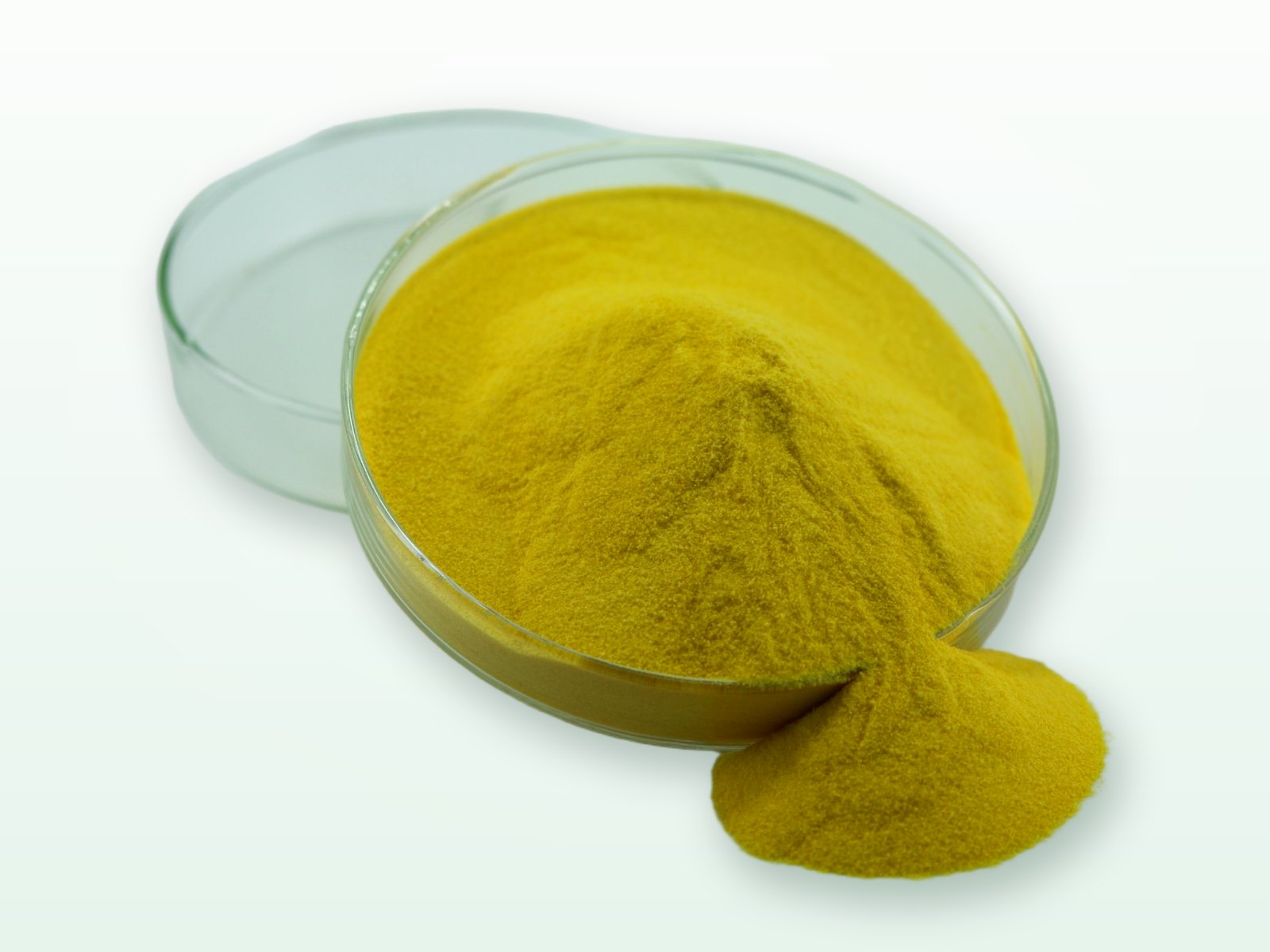
What it is and how it works
Polyaluminium chloride is an inorganic polymer of aluminium. Because it is already partially hydrolysed, it reacts faster than aluminium sulphate and is far less sensitive to water temperature — which is why it holds up in winter, when alum coagulation slows down.
When dosed into water, the polymer neutralises the negative charge on clay and organic colloids. The particles can then approach each other and form flocs, either by charge neutralisation at low dose or by sweep flocculation at higher dose, where the precipitate enmeshes particles as it settles.
Typical specification
| Parameter | Typical value | Method / note |
|---|---|---|
| Al2O3 content (solid, industrial) | ≥ 28.0 % | GB/T 22627 |
| Al2O3 content (solid, drinking water) | ≥ 29.0 % | GB 15892 |
| Al2O3 content (liquid) | 10.0 ± 0.5 % | GB/T 22627 |
| Basicity | 40 – 90 % | GB/T 22627 |
| pH (1 % solution) | 3.5 – 5.0 | GB/T 22627 |
| Water insolubles | ≤ 1.5 % | GB/T 22627 |
| Appearance | Light yellow to yellow powder | Visual |
| Heavy metals (as Pb) | ≤ 0.001 % | GB/T 22627 |
Typical values for the industrial grade range. The certificate of analysis for your batch is the governing document; ask us for the current COA before placing a repeat order.
Dosing guidance
- Surface water clarification: 10 – 30 mg/L, adjusted by turbidity.
- Industrial wastewater and tertiary treatment: 30 – 50 mg/L.
- High-turbidity shock loads: start at 1.2 – 1.5 times the normal dose, not more.
- Always confirm with a jar test: 1 min rapid mix at about 200 rpm, 10 min slow mix at 50 rpm, 30 min settling.
Packing and storage
| Powder | 25 kg PP woven bag with PE liner; 1000 kg jumbo bag |
|---|---|
| Liquid | 25 L drum, 1000 L IBC, or bulk tanker |
| 20 ft container | 25 t floor-loaded, about 20 t palletised |
| Storage | Dry, ventilated, below 40 °C; keep bags sealed |
Polyaluminium chloride FAQ
What basicity should I choose?
Lower basicity, around 40 – 60, gives a more stable product and a wider pH window, which suits raw water that changes with the season. Higher basicity, around 70 – 90, polymerises further and bridges flocs more strongly, but is less forgiving in cold, low-turbidity water. Send us the water analysis and we will recommend a range rather than a single number.
Powder or liquid — which is cheaper?
Compare cost per kilogram of Al2O3, not cost per tonne of product. Liquid PAC contains roughly 10 % Al2O3, so one tonne of liquid carries about a third of the active content of a tonne of 28 % powder, before freight and handling. Liquid saves dissolving work and dust control; powder is cheaper to ship over long distances.
Why does the powder go sticky in storage?
Moisture. PAC is hygroscopic, so an opened bag left in humid air absorbs water and starts to lump. Keep bags on pallets, reseal part-used bags, and use stock on a first-in-first-out basis. Lumps that still dissolve are usually a handling issue rather than a quality failure, but check the COA if solubility drops.
What is the shelf life?
About 12 months for powder in unopened bags under dry storage, and about 6 months for liquid in a closed tank. Basicity and Al2O3 content drift slowly in liquid product, so avoid holding more than one season of stock on site.